NVIS
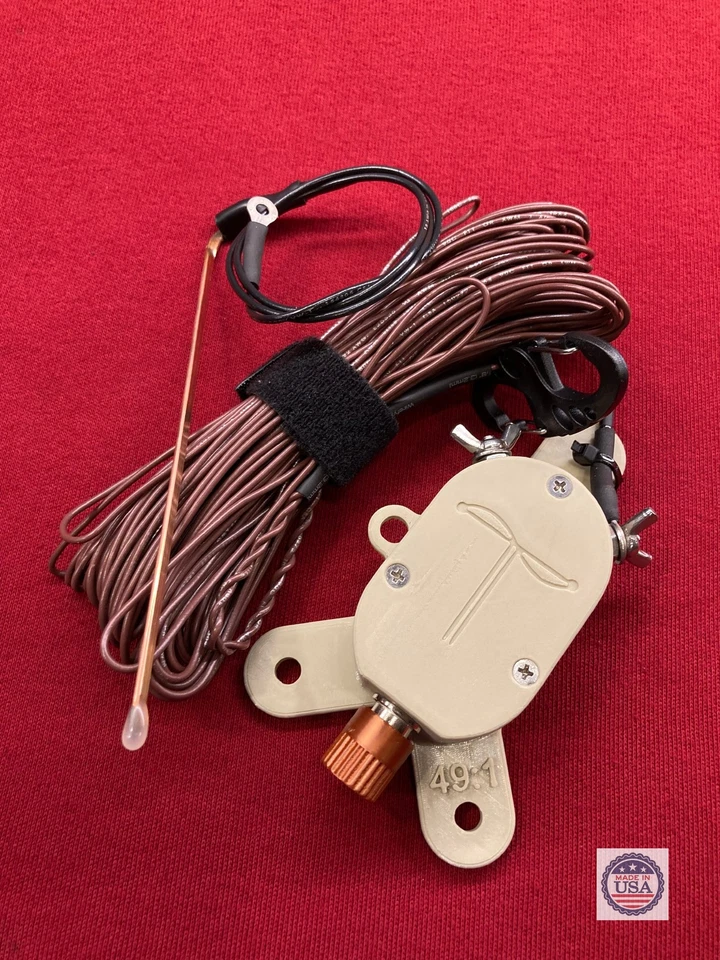
No-Tune EFHW End-Fed Half-Wave Antenna Rugged 40/20/15/10M with 49:1 Fair-Rite 16MM Toroid.
An NVIS (Near Vertical Incidence Skywave) antenna for the (tr)uSDX QRP transceiver is ideal for regional, mountainous communications.
To optimize the (tr)uSDX's 5W output, a low-slung 40m or 80m dipole with high-angle radiation is required.
You can build or pack an ultra-portable, resonant wire antenna using a 4:1 unun to match the low feedpoint impedance.
Key Considerations for (tr)uSDX NVIS
- Frequency Bands: Focus on 40 meters (daytime) and 80 meters (nighttime) depending on ionospheric critical frequencies.
- Antenna Height: To achieve a high take-off angle (sending signals straight up for a 20- to 300-mile range), mount the dipole very low to the ground—ideally only 0.05 to 0.15 wavelengths high (e.g., about 5 to 10 feet off the ground for 40m).
- Wire Configuration: A flat-top dipole, an inverted-V, or a random wire with a counterpoise can all be used.
Portable Antenna Options
- Multiband End-Fed Half-Wave (EFHW): Use a 49:1 or 64:1 transformer with a 66-foot wire (for 40/20/15/10m) or a 132-foot wire (for 80m). This works excellent in a sloper configuration.
- Linked Dipole: Cut for 40m with alligator clips/banana plugs to add extensions for 80m.
Deployment Tips
Tech Prepper
Gaston explains daytime 40 meter 400 mi range "flat topper" NVIS antenna positioning showing JS8Call with (tr)uSDX
He also explains 20 meter mid to long range propagation(1000 mi++) with skip propogation "slooper" "low takeoff angle" positioning.