Knots
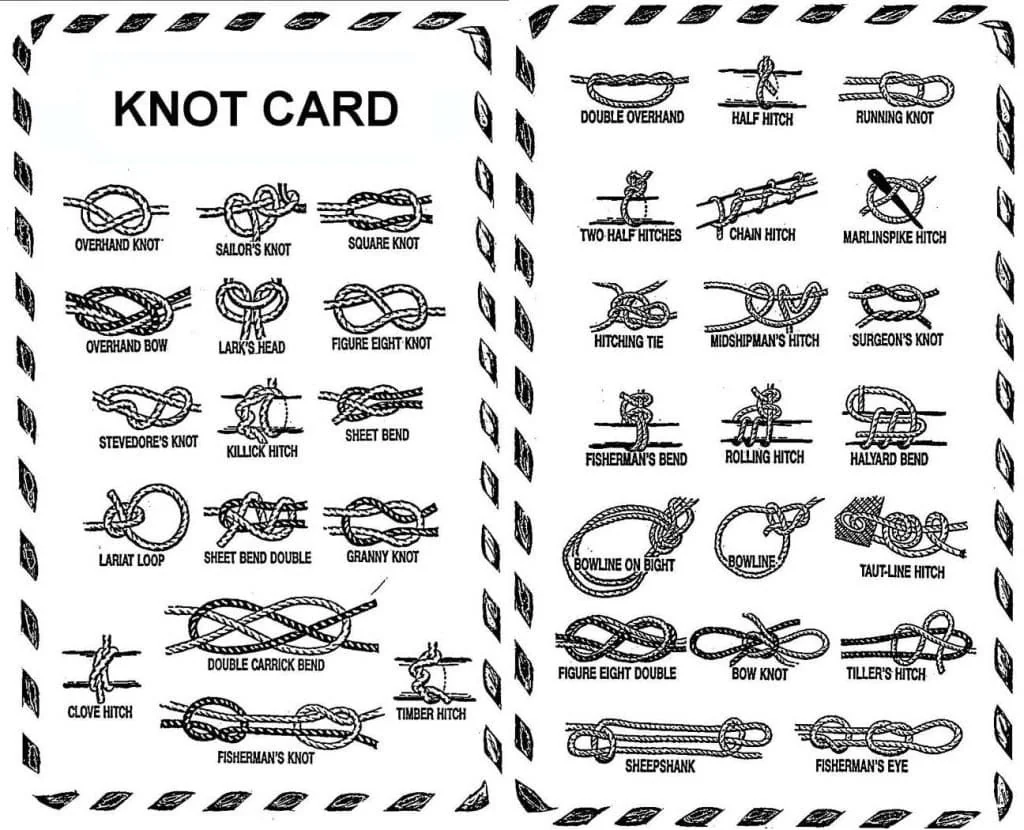
Bowline
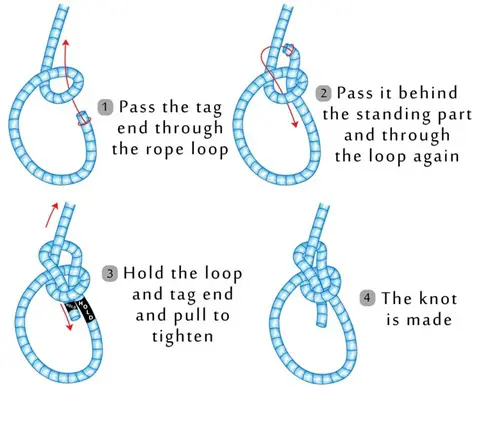 |
Mnemonic story: make a hole; rabbit hops up out of the hole, runs around the tree,
and back down the hole.
When subjected to tension, the loop keeps its shape, and you can still untie it after it's borne its load. It's a great tie down knot, and is really handy in emergency situations. This knot forms an open loop that is easy for someone to grab onto and be pulled up out of a dangerous situation. |
Tarp Knot
|
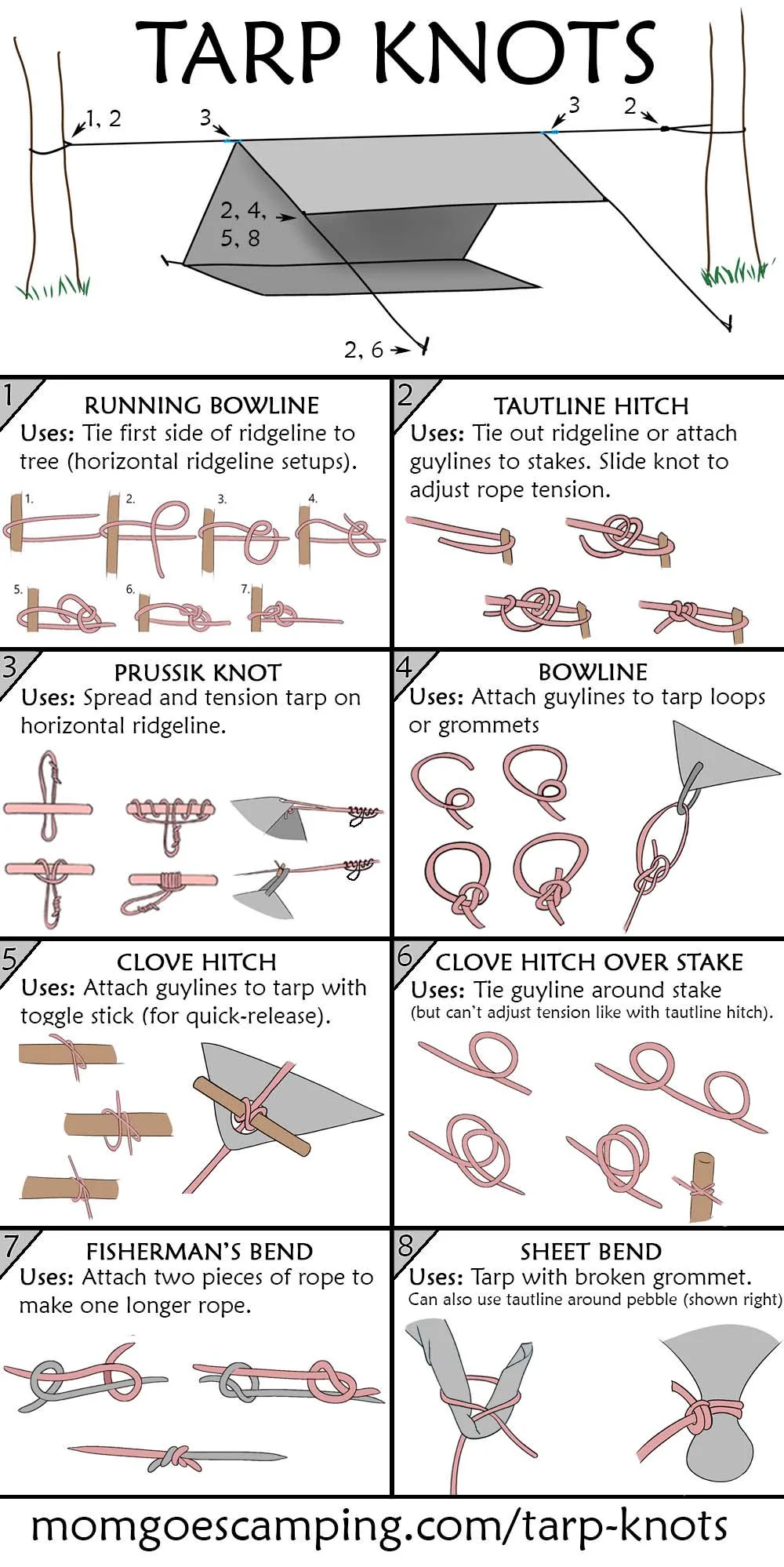
The most essential knots for setting up a tarp shelter are the Taut-line Hitch,
Bowline, and Prusik Knot. These knots provide the necessary tension, security,
and adjustability required to create a stable, weather-resistant shelter.
|
Double Sheet Bend
|
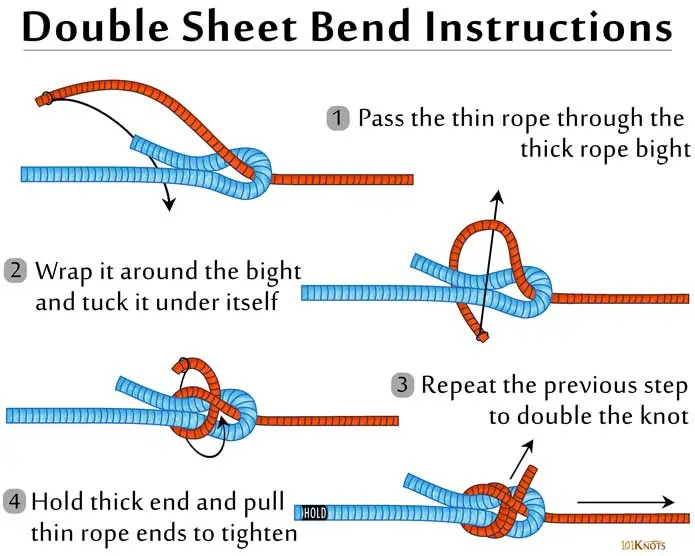
The Double Sheet Bend is a strong joining knot used to secure two ropes of unequal diameter or stiffness together. It serves as a more secure, doubled variation of the standard Sheet Bend, offering enhanced grip and reduced slippage through an additional wrap of the smaller rope. |
Sheet bend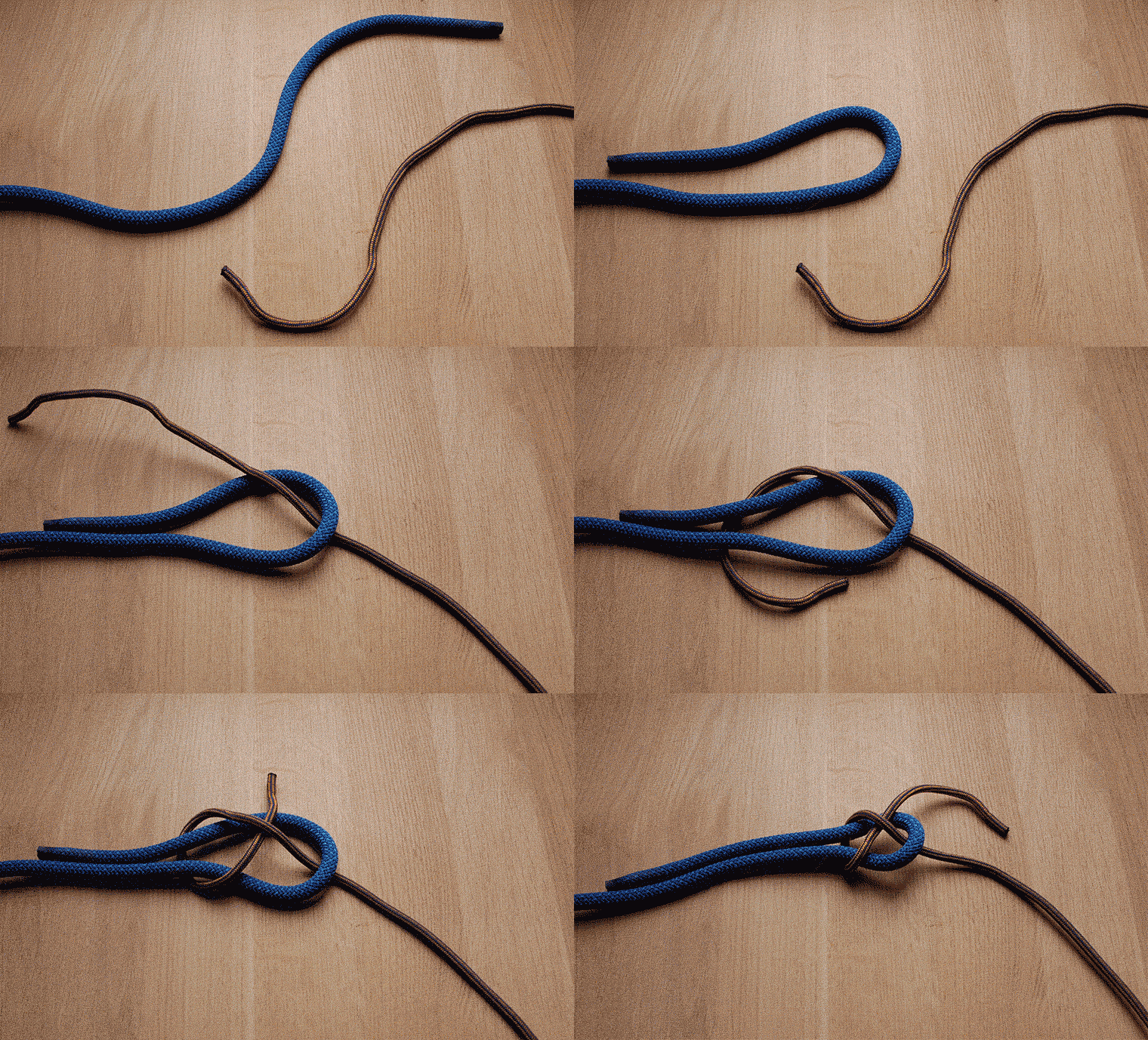 |
Sheet bend
|
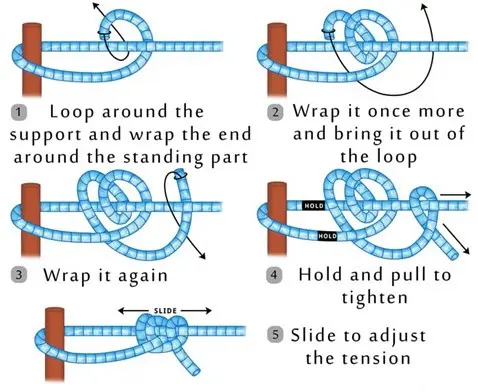
Taut line hitch
|
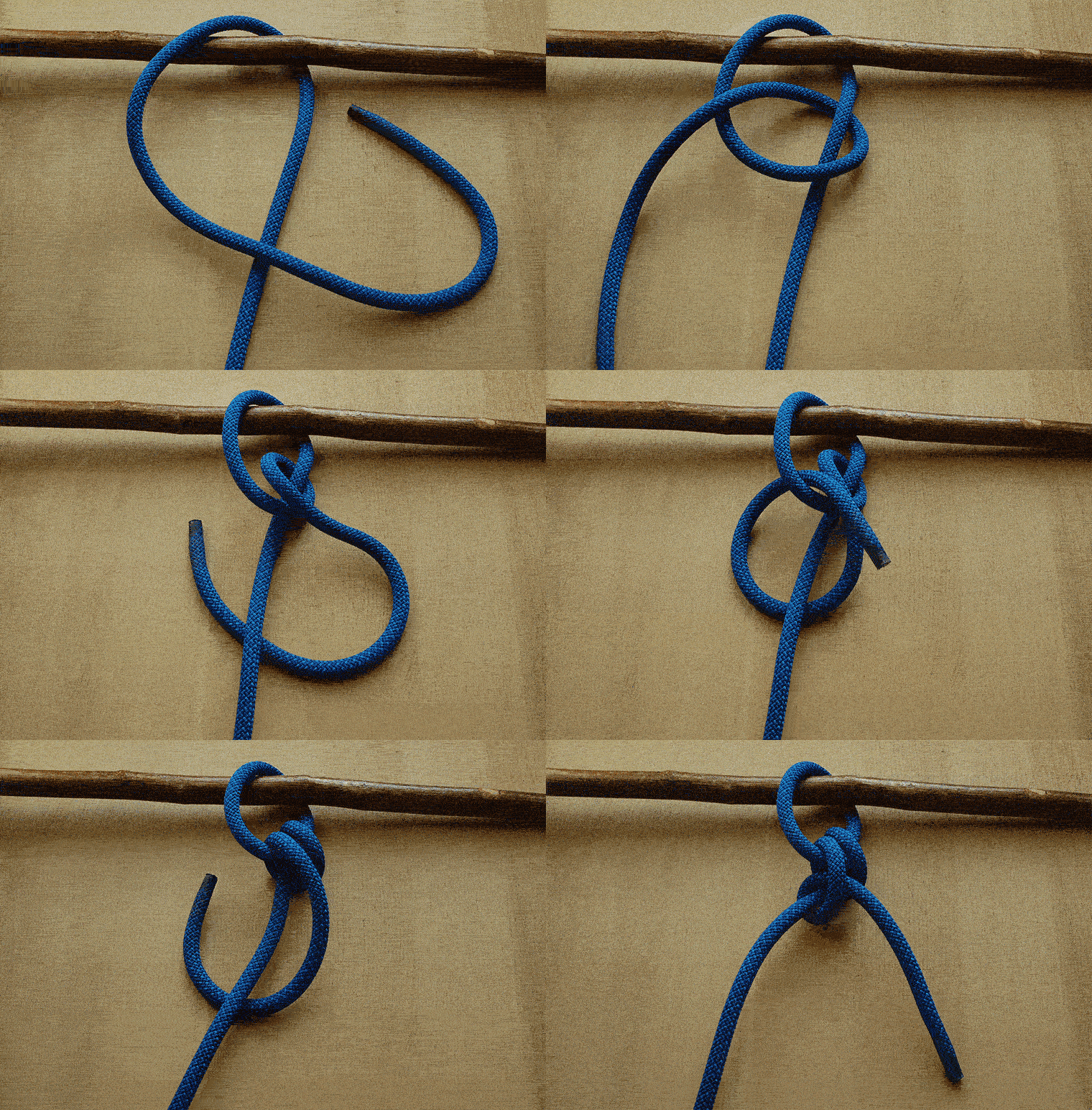
A Taut-line Hitch is used to create an adjustable knot that can slide back and forth along a line and is secure assuming it is tight.
It is really good for providing adjustable tension for guy ropes on a tarp.
|
Taut line knot
 |
|
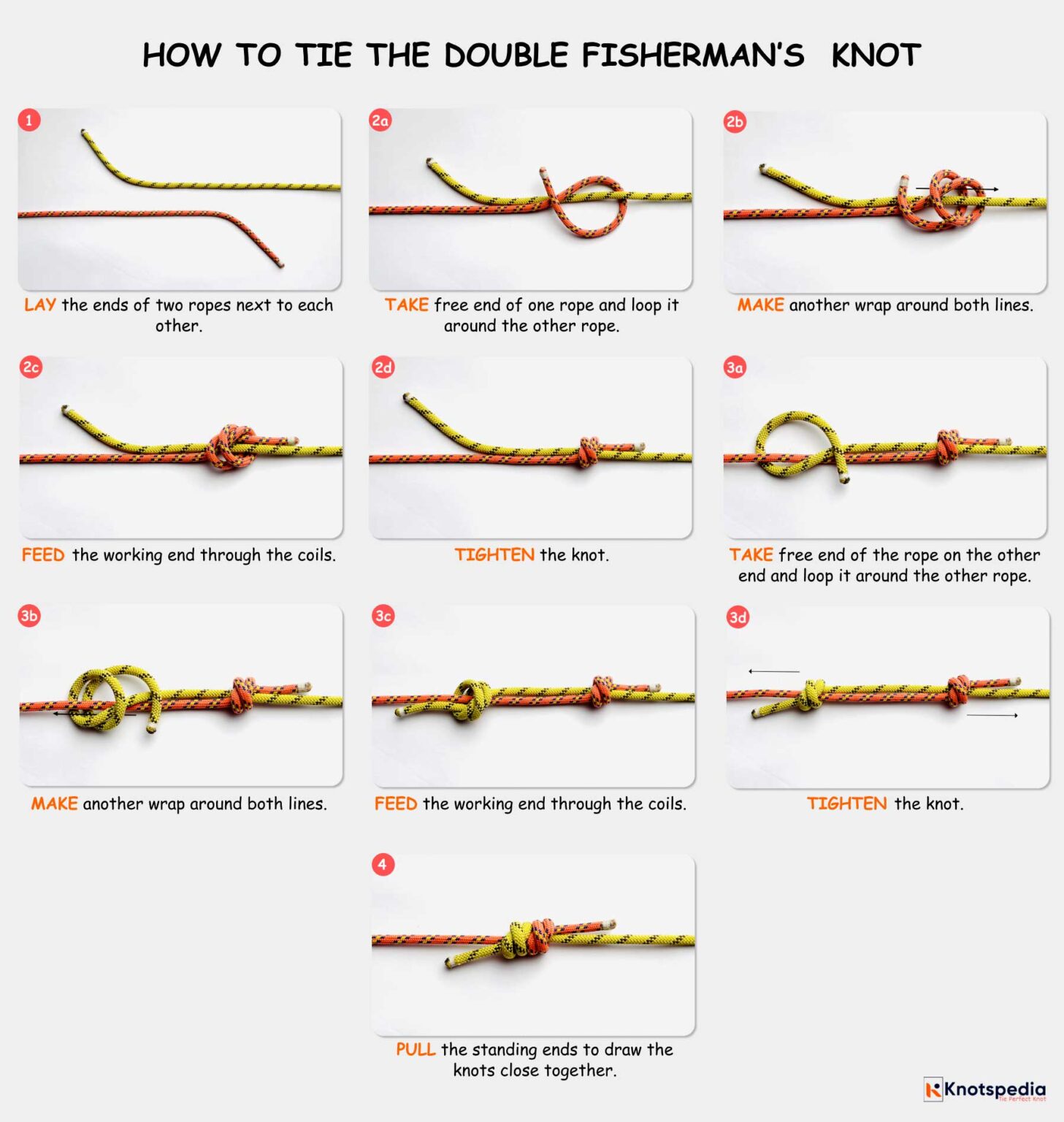
Double Fisherman
|
The double fisherman's knot lets you strongly and securely join two rope ends together. |
Halter hitch
 Halter Halter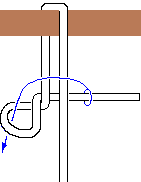 Siberian Siberian |
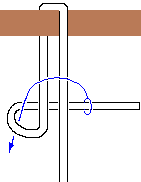
The Halter Hitch is basically a form of overhand noose, with an overhand knot that is slipped. This makes this particular knot very well suited as a general purpose knot for tethering animals. It also has the advantage that no matter how much strain is applied to the halter, the Halter Hitch can easily be slipped and undone. This knot is very quick and easy to
tie and untie, so if an animal becomes panicky a quick tug and the the knot
is released. These quick, clean-tying, general utility hitches are both slipped hitches, where a bight of rope is tucked as shown by the blue arrows. This allows a tug of the free end to spill the hitch. The Siberian Hitch is a variant of the Halter Hitch that involves an extra twist of the Halter Hitch's first bight. Both hitches may capsize under demanding conditions. |
Clove hitch
|
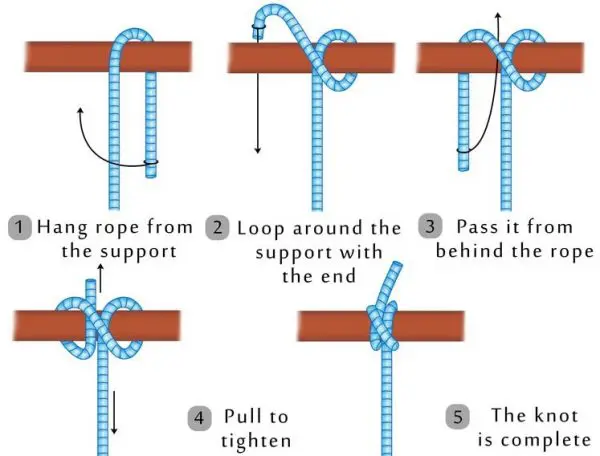
Mnemonic rhyme: loop right around the pole, loop left around the pole, then up through the hole. This knot has come in very handy whenever there is a need to securely tie the end of a rope to a stationary object. Its an absolute winner for tying your tarps to poles, or hanging your hammock or making a rope clothesline. Need secure something on your roof racks? Use this knot. |
Prusik
|
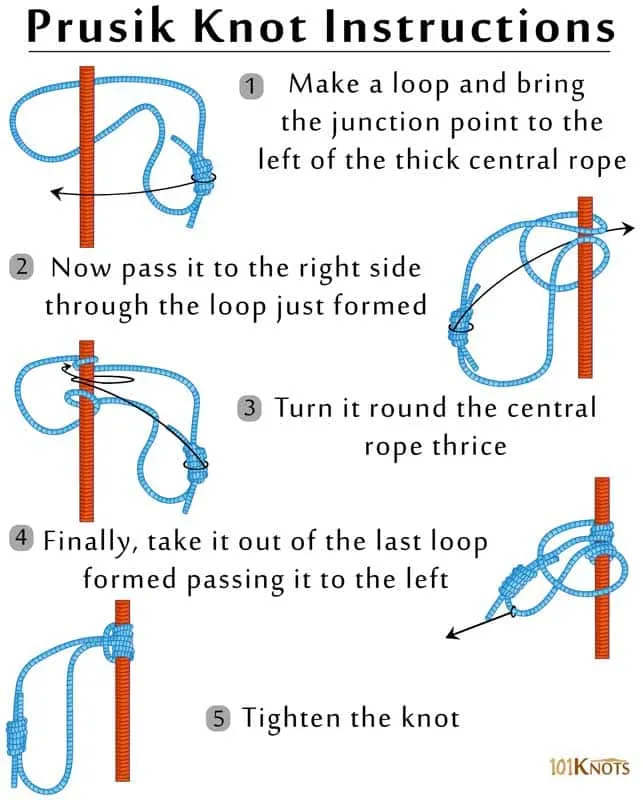
The Prusik is a friction hitch used to attach a loop of cord around a rope, allowing the loop to slide freely when unloaded and grip securely when weighted. |